
Glyphs · custom code
Write code only where config stops.
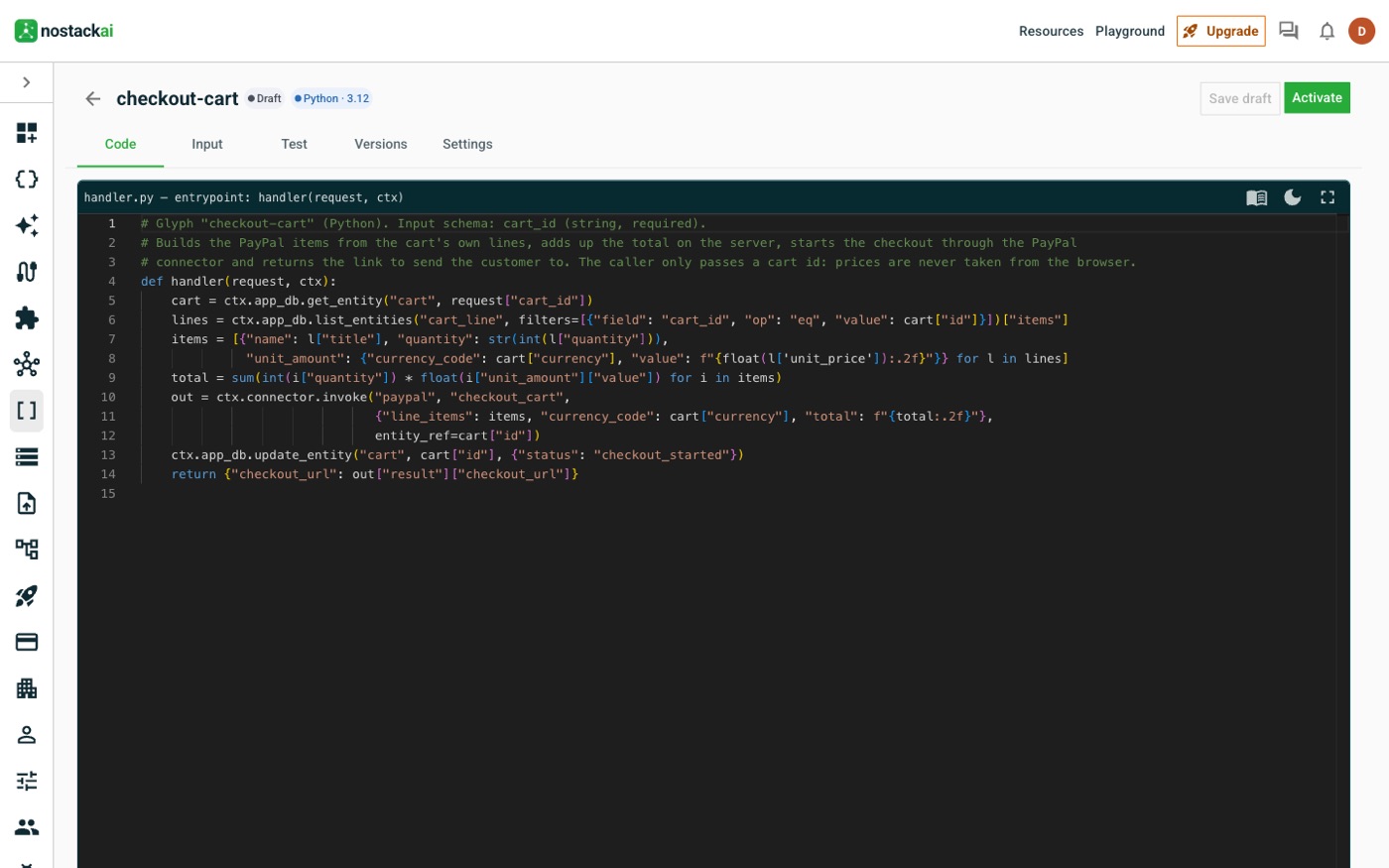
A Glyph is a small Python 3.12 or Node 22 function that runs sandboxed next to your data. Use it when a Logic Block is not enough, and keep everything else as config.
Run it anywhere
One function, four ways to call it.
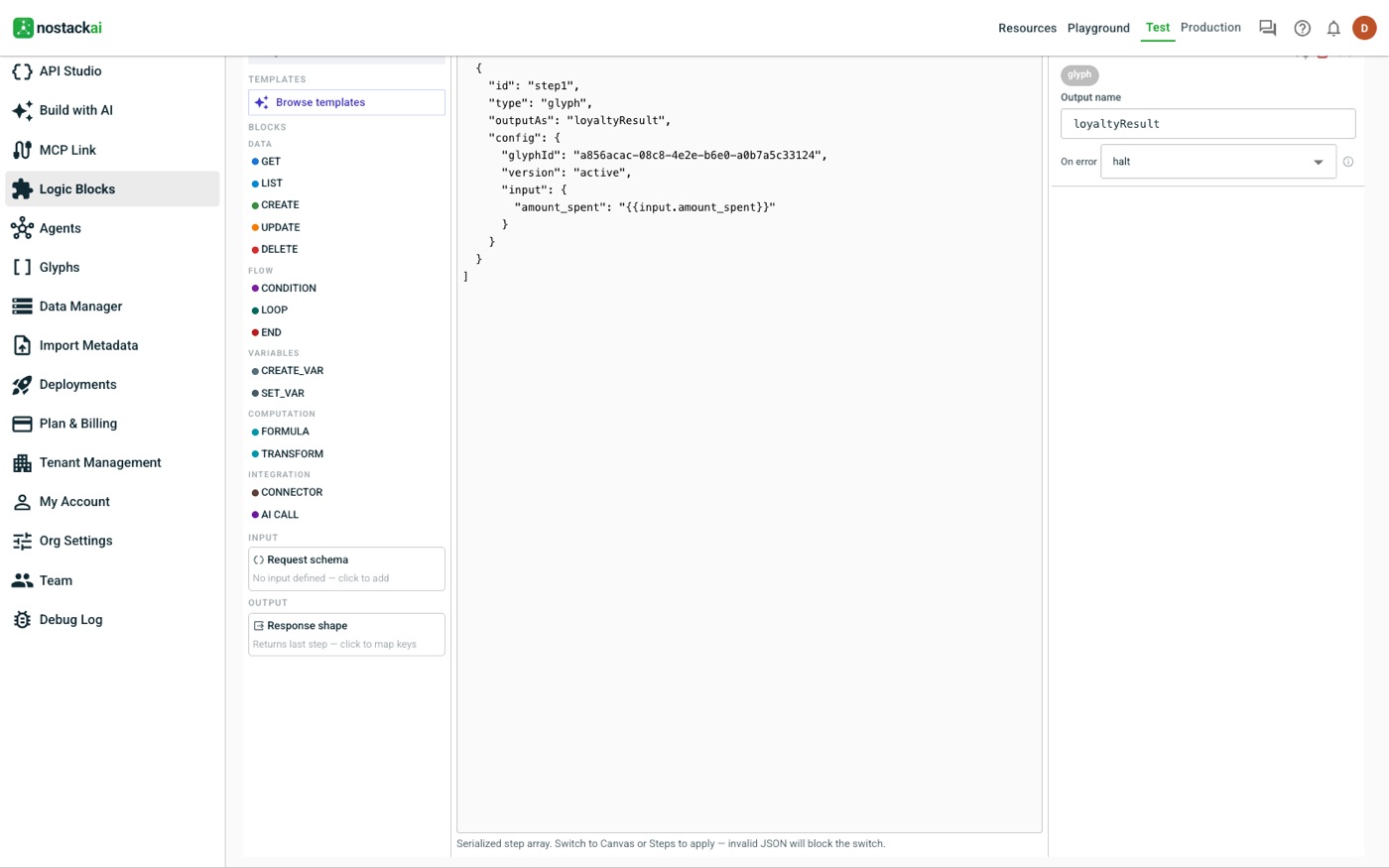
Use the same Glyph as a Logic Block step, an agent tool, a scheduled job or its own HTTP endpoint.
- Test tab with saved inputs
- Drafts, published versions and restorable history
- Large Glyphs: 2 GB and up to 14 minutes on Pro
The SDK
Everything the platform has, in ctx.
Read and write entities, call connectors and allowlisted HTTP, send email, publish events and queue work, with a curated standard library.
ctx.app_dbfor your entitiesctx.connector.invokefor any adopted connectorctx.paramsfor per-workspace settings and secrets
# glyph: apply_loyalty_discount   (Python 3.12)
def handler(request, ctx):
    order = ctx.app_db.get_entity('order', request['id'])
    past = ctx.app_db.list_entities('order',
        filters=[{'field': 'customer', 'op': 'eq',
                  'value': order['customer']}])
    rate = 0.1 if len(past['items']) >= 5 else 0
    return {'discount': round(order['total'] * rate, 2)}
Safe by default
Sandboxed, checked and redacted.
No raw imports. Code is hash-checked before every run, outbound HTTP is limited to allowed domains, and secrets never reach the logs.
Ready when you are
Describe it once. Run it forever.
Connect your AI client, build your backend, ship to production.